A hiring team needs to validate industry relevance before shortlisting or interview selection.
When to Use This Playbook
Know when industry context actually matters
Separate direct industry experience from adjacent and genuinely transferable exposure.
An evidence-backed view of whether the candidate's domain background supports the role.
Exposure, depth, recency, operating context, responsibilities and role relevance.
What You Need
Inputs before you begin
Define the role context first, then evaluate candidate evidence against the same standard.
Role Evidence
✓Target industry and adjacent industries
✓Job description and core responsibilities
✓Required domain knowledge or regulation
✓Essential vs learnable industry requirements
Candidate Evidence
✓Resume or professional profile
✓Employment and project history
✓Customer, product and market exposure
✓Role scope, ownership and outcomes
Workflow Overview
Five steps from role context to shortlist
A consistent sequence keeps industry relevance from becoming a keyword or employer-name filter.
Define
Set required industry context
Extract
Map candidate exposure
Evaluate
Assess depth and relevance
Cross-check
Match role responsibilities
Prioritise
Rank candidates with context
Step by Step
The operational playbook
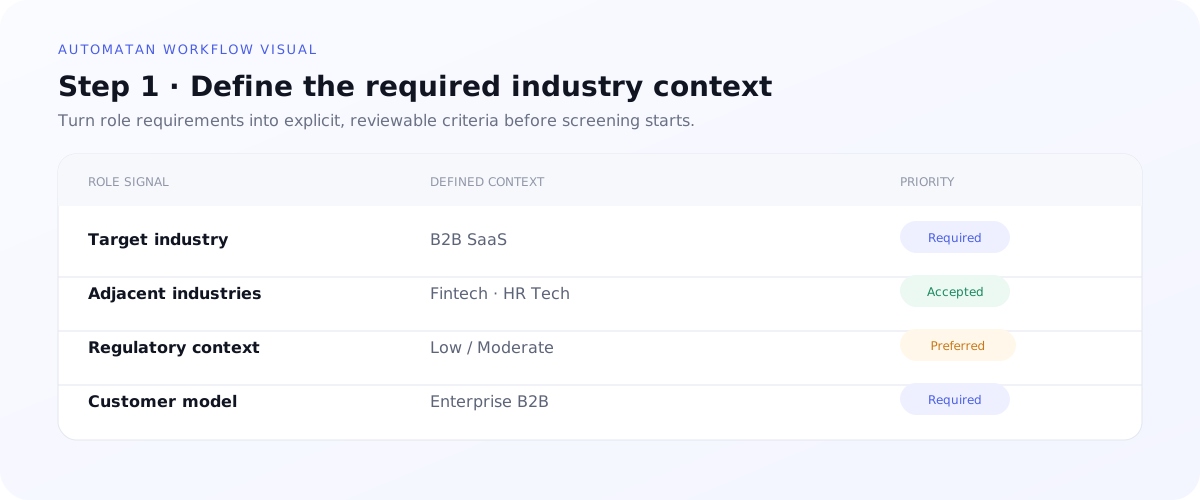
Define required industry context
Identify the domain knowledge, customers, regulations, business models, technologies and operating conditions that affect performance. Separate requirements that are essential on day one from context that can be learned.
✓ Target and adjacent industries defined✓ Hard requirements separated from preferences✓ Operating context documented✓ Hiring stakeholders aligned
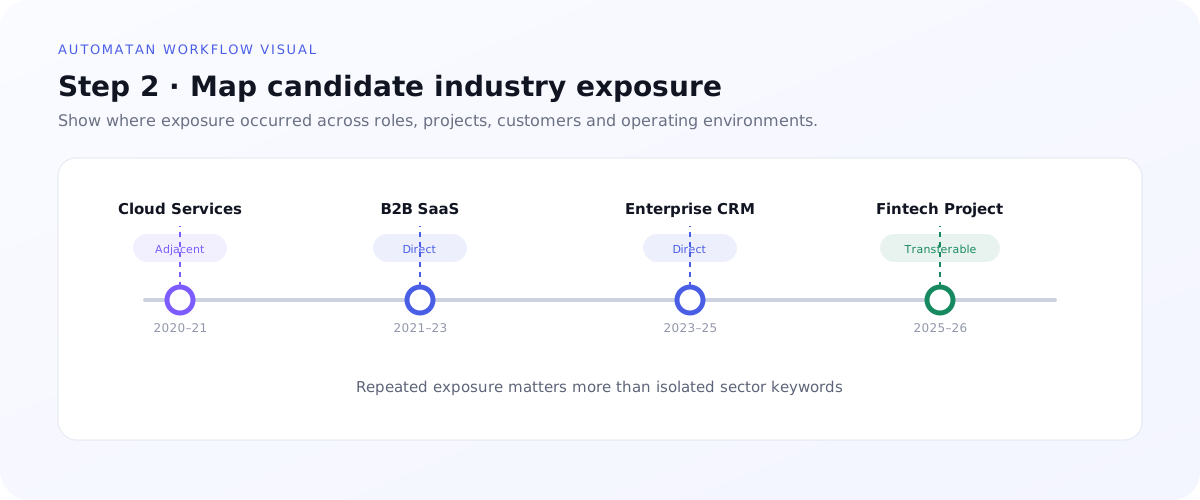
Extract industry exposure across candidates
Review where candidates operated, what customers or products they supported, and whether exposure came from employment, consulting, clients, projects or regulated work.
✓ Direct exposure identified✓ Adjacent exposure identified✓ One-off mentions separated from sustained work✓ Same evidence standard used for all candidates
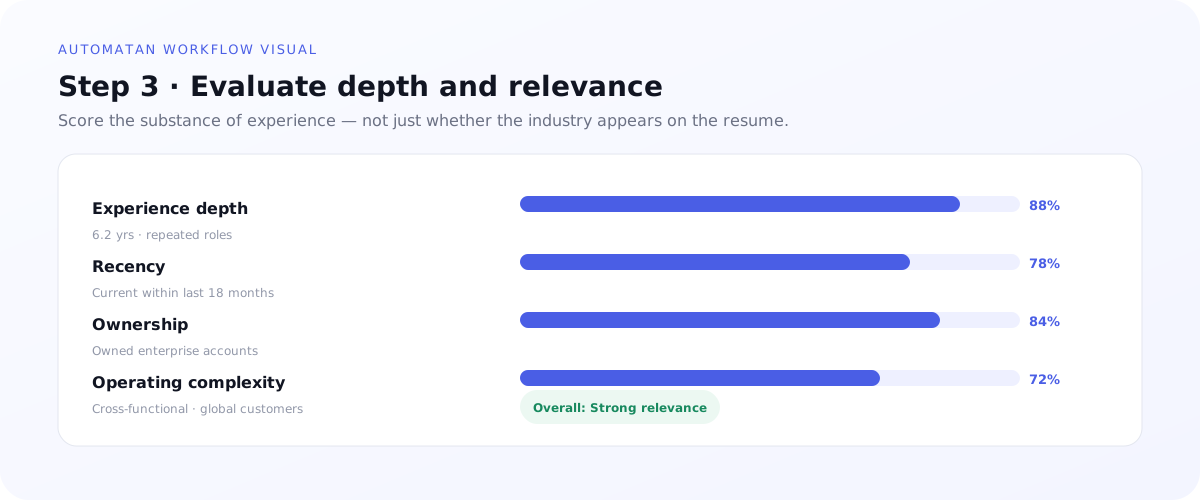
Evaluate depth and relevance
Compare duration, recency, responsibility and operating complexity. An adjacent-industry candidate with strong functional overlap may be more relevant than a candidate with a familiar employer name but limited role-level exposure.
✓ Depth and recency validated✓ Ownership examined✓ Sector-specific constraints considered✓ Superficial exposure flagged
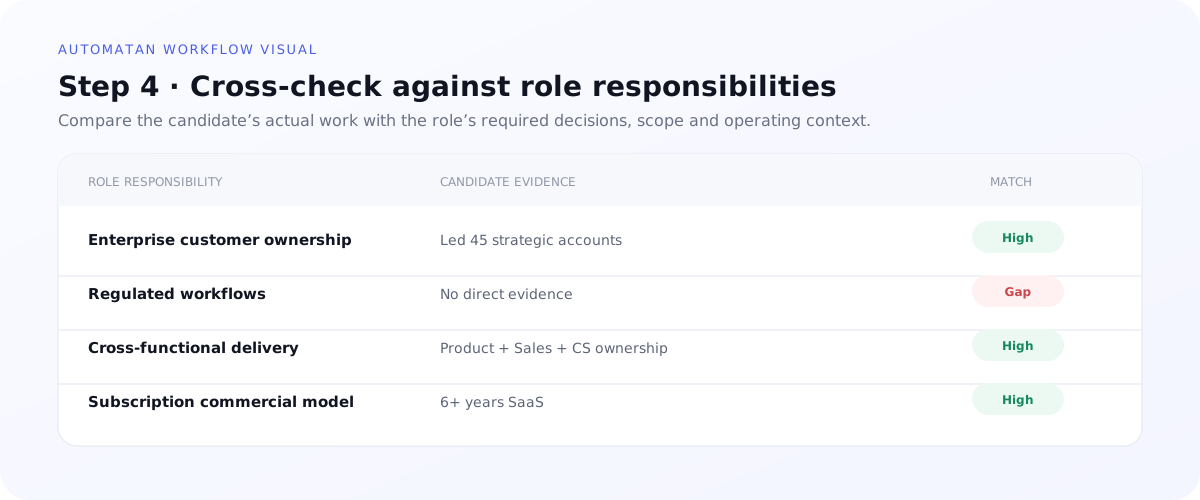
Cross-check against role responsibilities
Validate whether the candidate performed comparable work at a similar level of scope, complexity and decision-making — not simply whether they worked in the same sector.
✓ Functional overlap confirmed✓ Industry skills supported by examples✓ Comparable decision context reviewed✓ Role-specific gaps identified
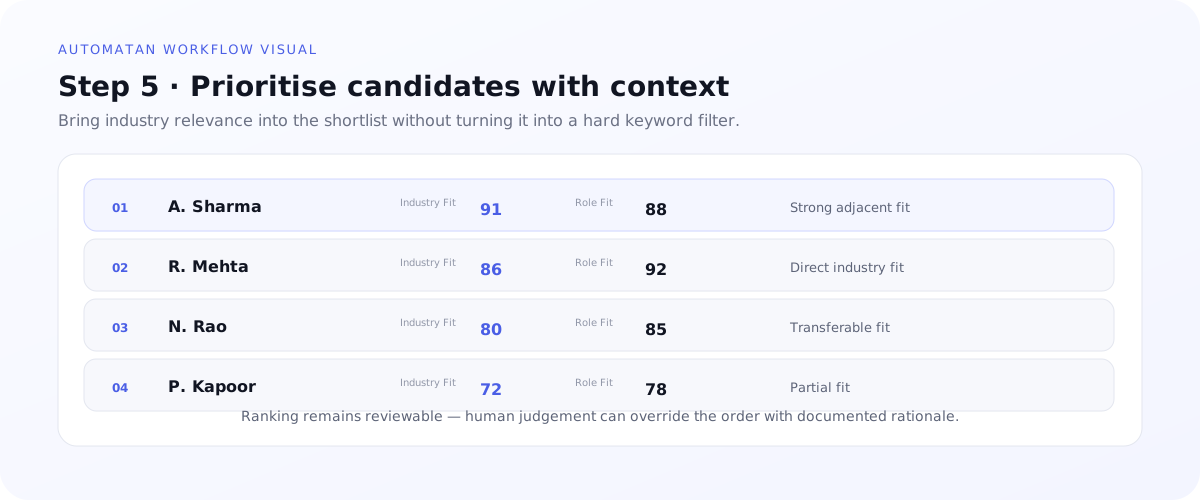
Prioritise candidates with context
Use industry relevance alongside functional capability and other role-fit evidence. Review where transferable experience may outweigh direct sector tenure before advancing candidates.
✓ Industry fit balanced with capability✓ Adjacent candidates retained where justified✓ Ranking rationale explainable✓ Final shortlist receives human review
Common Mistakes
Where industry-fit screening goes wrong
Employer name = fit
A target-sector employer does not prove that the candidate performed relevant work.
Job title = evidence
The same title can represent materially different work across industries and companies.
Adjacent experience ignored
Transferable operating context can be more valuable than direct sector tenure alone.
Years used as a shortcut
Depth, responsibility and recency matter more than a simple duration threshold.
What Automatan Analyzes
Evidence behind the Industry Fit decision
Industry Exposure · direct / adjacent / transferableExperience Depth · duration / recency / repetitionRole Scope · ownership / complexity / decisionsOperating Context · customers / regulation / marketSkill Evidence · demonstrated functional capabilityRole Alignment · overlap with target responsibilities
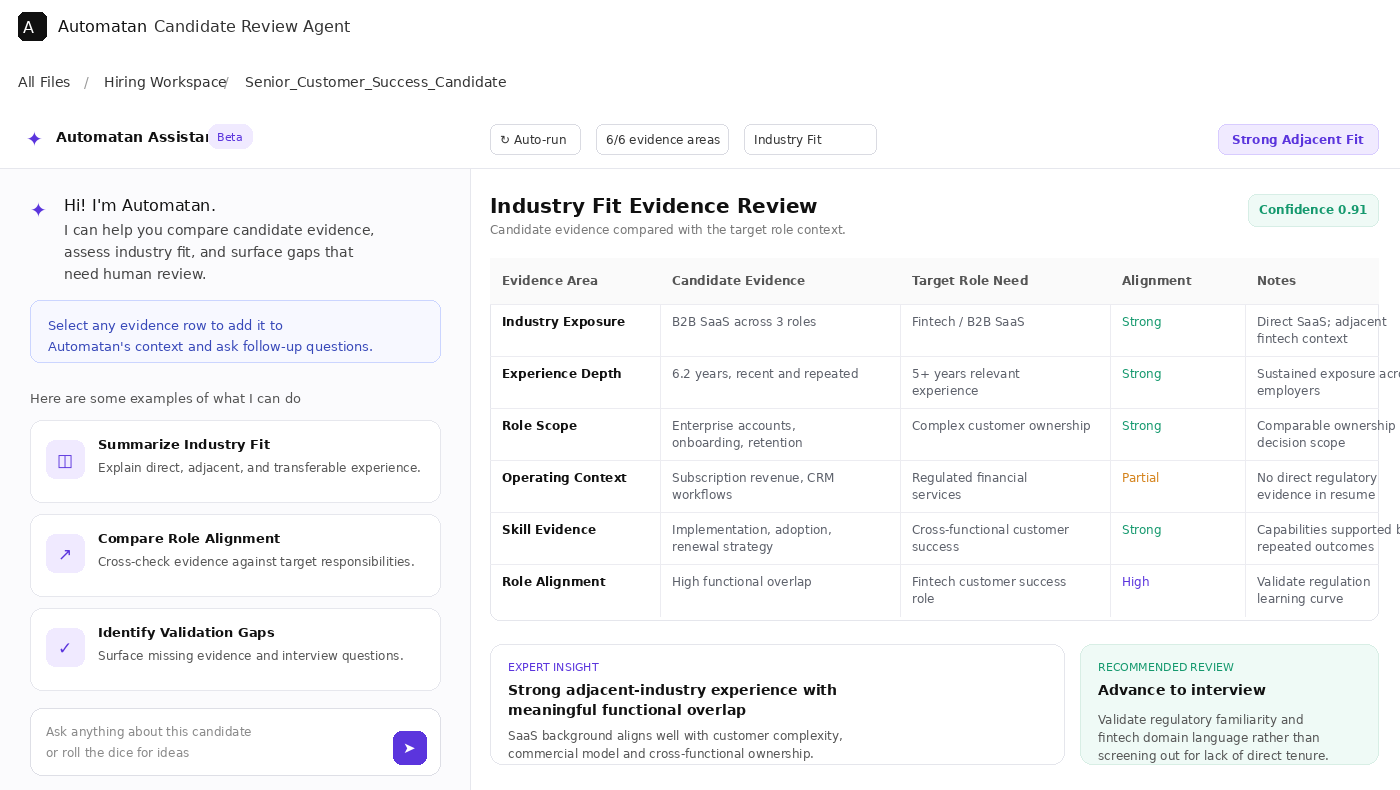
Illustrative Industry Fit output showing how Automatan compares candidate evidence with role requirements, surfaces alignment, and identifies gaps for human validation.
InsightWhat It Shows
Industry ExposureWhere and how the candidate operated across industries and customer environments.
Work ExperienceDepth, recency, ownership, progression and repeated responsibility.
Skill AnalysisCapabilities demonstrated through actual responsibilities and outcomes.
Role FitOverall alignment between candidate evidence and role requirements.
FAQ
Frequently asked questions
What is the difference between industry exposure and industry fit?
Industry exposure shows where a candidate has encountered a sector or operating environment. Industry fit evaluates whether that exposure is sufficiently deep, relevant and transferable to support performance in the target role.
Should recruiters screen out candidates without direct industry experience?
Not automatically. Direct experience should only act as a hard requirement when the role genuinely depends on specialised domain knowledge, regulatory familiarity, safety-critical judgement or a very short learning curve.
What signals show transferable industry experience?
Look for repeated responsibilities, meaningful ownership, comparable customers, technologies, regulations, business models and decision-making conditions.
Can AI assess industry fit from a resume alone?
AI can organise and compare the evidence available in a resume, but missing context should be validated through interviews, work samples, references or additional candidate information before a final decision.
How should adjacent industry experience be evaluated?
Compare the candidate’s customers, operating model, regulations, technologies, decision-making scope and functional responsibilities with the target role instead of relying on sector labels alone.
How much industry experience is enough for a role?
There is no universal tenure threshold. The right level depends on the role’s complexity, domain learning curve, regulatory exposure and how much sector-specific context can be learned after hiring.
How should recency affect industry-fit assessment?
Recency should be considered alongside depth, repetition and relevance when evaluating industry-fit evidence.
How can hiring teams compare industry fit consistently across candidates?
Use a shared evidence standard covering exposure, depth, role scope, operating context and alignment.
What should recruiters validate during the interview after an industry-fit review?
Validate the candidate’s understanding of the operating context, transferability of experience, decision-making scope and any identified gaps.
Related Resources
Continue the candidate review
Explore the teams, AI agents, solutions and articles that support this hiring decision.
RELATED SOLUTION
→Candidate Assessment
Evaluate candidate evidence across experience, skills, fit and hiring risks in one structured review.
RELATED AI AGENT
→Candidate Fit Analyst
Review candidate evidence against role requirements and surface supported fit signals, gaps and validation needs.
Related Teams
More from the Blog