Regulatory volume rises every year. Your ops headcount doesn't.
Automatan agents automate the operational workflows that consume your team — onboarding, compliance checks, exception handling, reporting — with the governance controls financial services requires.

What your ops team is losing today
Every manual workflow carries a measurable cost. These numbers are drawn from financial services operations teams before Automatan deployment.
Manual compliance checks
KYC refreshes, sanctions screening follow-ups, and exception processing — hours of analyst time spent on tasks that follow the same logic every time.
Onboarding delays
Every day of onboarding friction delays revenue and risks the client relationship. Most of the delay is coordination, not decision-making.
Error remediation
A single compliance exception that reaches regulatory attention triggers audit response, remediation labor, and management time that dwarfs the cost of prevention.
Reporting overhead
Analysts assembling recurring reports from multiple systems — pulling, reconciling, formatting, checking — work that adds no analytical value.
Most teams recover the full cost of Automatan within 90 days. We'll build your specific business case on the demo call.
Book DemoWhat changes when agents handle the process
Financial services operations that teams automate first — with before and after for each.
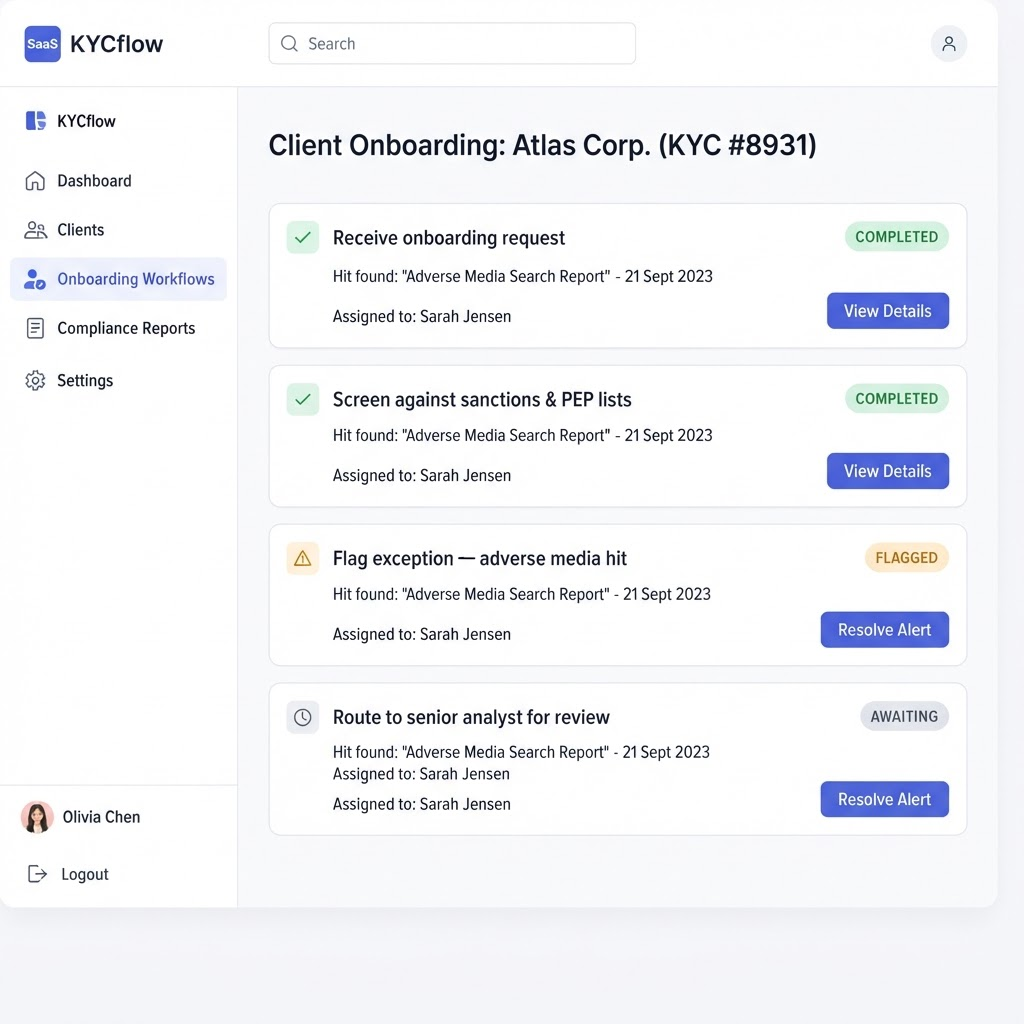
Client onboarding and KYC refresh
Agent collects documentation, runs initial screening against sanctions and PEP lists, flags exceptions, and routes completed packages to an analyst for final review.
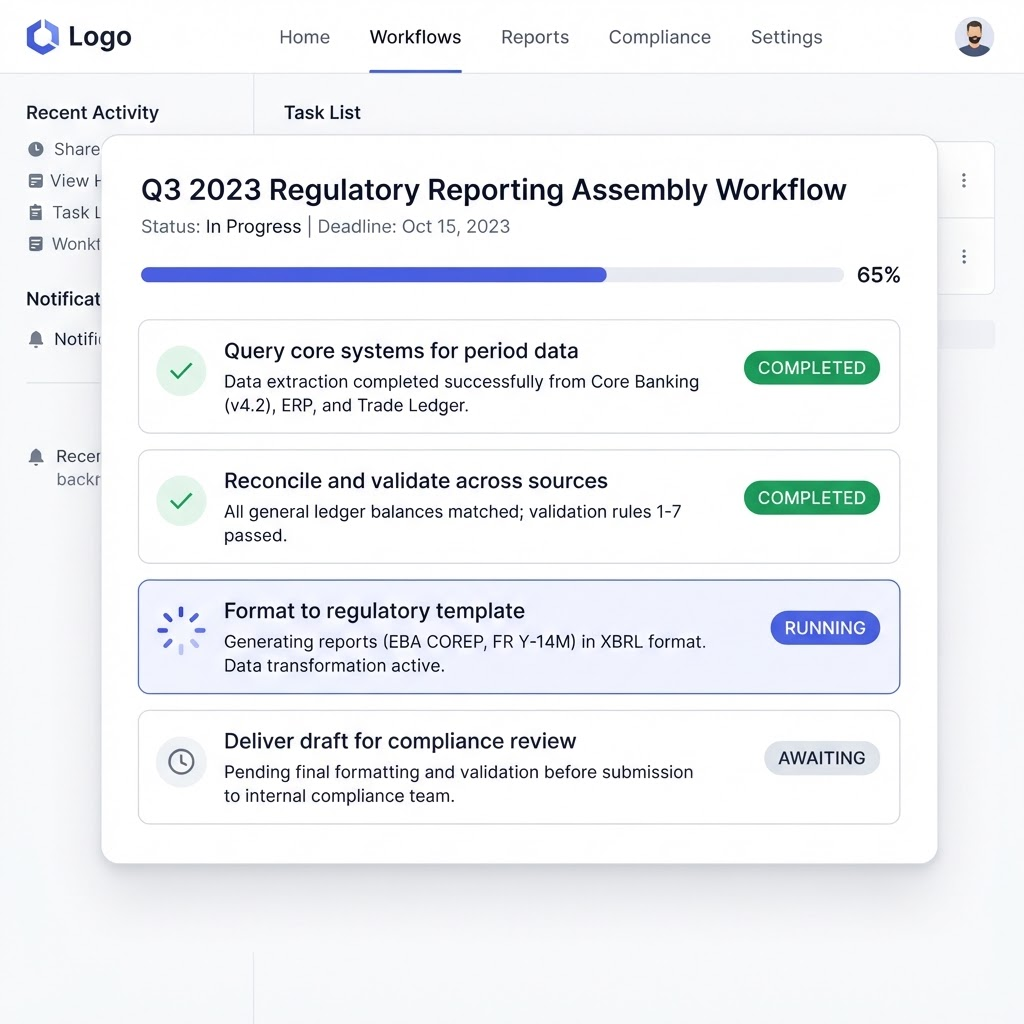
Regulatory reporting assembly
Agent pulls data from core banking and compliance systems, reconciles across sources, formats to regulatory specifications, and flags anomalies for analyst review before submission.
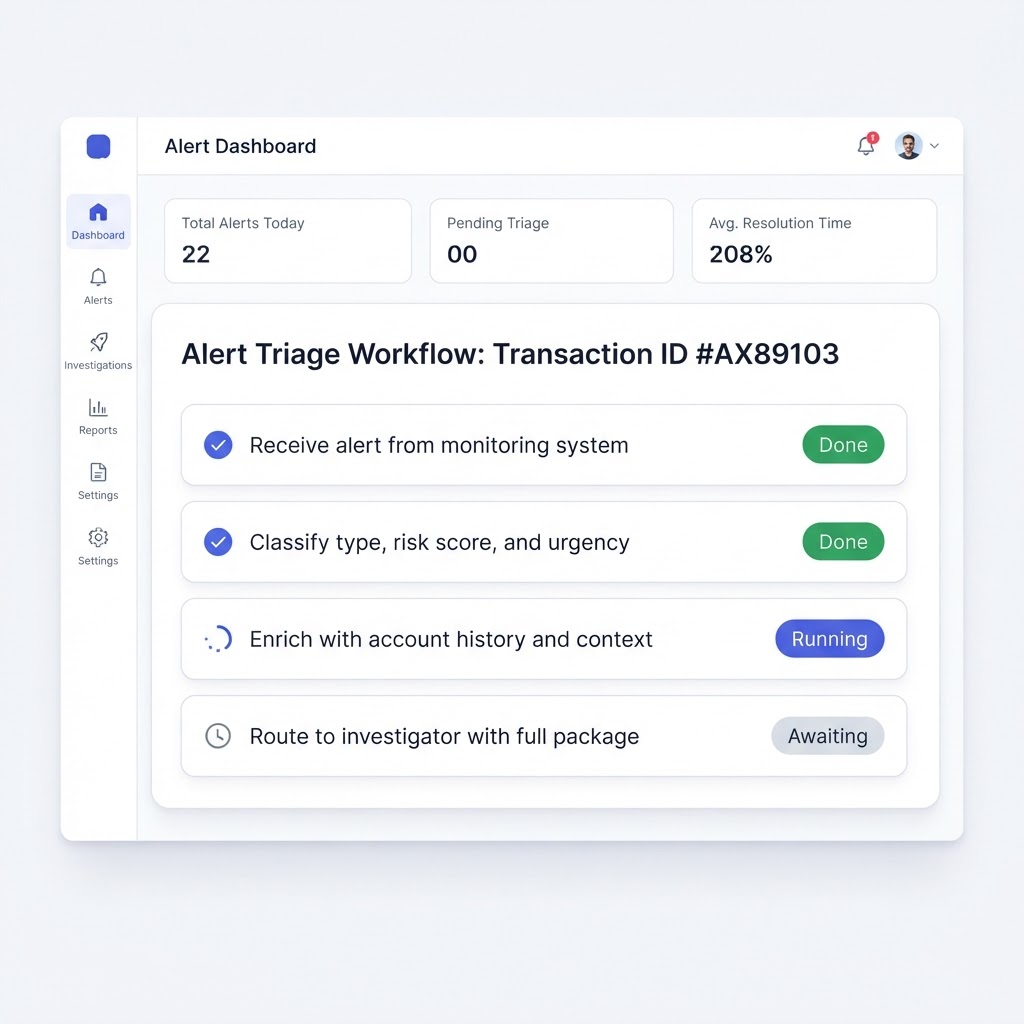
Exception and alert triage
Agent classifies incoming alerts from transaction monitoring and sanctions screening, enriches genuine alerts with account context, and routes them to investigators — filtering out 85%+ false positives before a human touches them.
See these workflows running with your actual systems.
Book DemoAutomatan inside your existing stack
Agents operate between your systems and your workflows. No rip-and-replace — connects to what you already run.
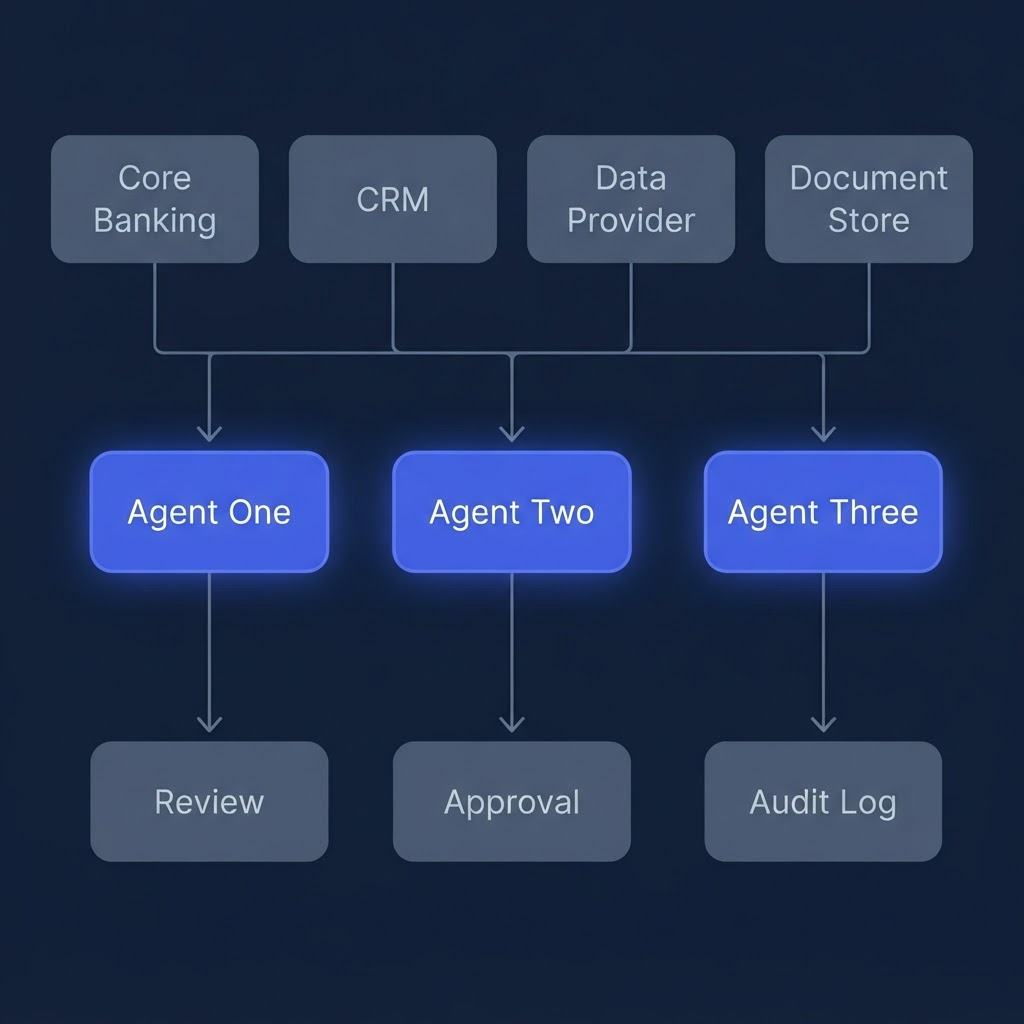
Connects to your infrastructure
Pre-built connectors for core banking, compliance platforms, CRM, document management, and communication tools. Custom integrations through API and webhook support.
Operates within your governance
Agents inherit your approval hierarchies, data classification rules, and access controls. Every action is logged against your existing audit requirements.
Adapts as regulations change
When a process changes due to new regulatory guidance, your ops team updates the agent's instructions directly. No engineering tickets, no six-week change request cycle.
Built for regulated industries
Compliance, data governance, and audit readiness are foundational to Automatan — not add-ons. Your compliance and security teams will find the controls they expect already in place.
Live in weeks, not quarters
Every deployment starts in shadow mode. Your team validates every decision before any agent operates autonomously.
Discovery and first agent
We map your priority workflow, configure the first agent, connect to your systems, and run in shadow mode alongside your existing process. No production impact — the agent observes and learns while your team works normally.
Validation and go-live
Agent runs live with human-in-the-loop approval on every action. Your team validates accuracy, adjusts rules, and builds confidence. Nothing goes out the door without sign-off during this phase.
Autonomous operation and expansion
First agent runs autonomously with your defined guardrails. Team identifies next workflows to automate. Each additional agent follows the same shadow → validate → release pattern.
What your CFO and compliance team will ask
These are the questions that come up in the budget conversation. Here are the answers.