Translate business expectations into measurable criteria
Define what successful agent behavior means for each use case, including desired outcomes, evaluation rubrics, acceptable boundaries, failure conditions, and escalation requirements.
Automatan deploys autonomous Eval Agents that continuously measure, diagnose, and improve AI systems—across outputs, reasoning, retrieval, tool calls, trajectories, policies, and business outcomes.
Trace-level evaluation · Continuous quality assurance · AI improvement loops

Eval Agents create the missing quality engineering layer between building an AI system, deploying it, and trusting it at enterprise scale.

Traditional software can be tested against predictable outputs. AI systems produce variable behavior shaped by models, prompts, context, retrieval, tools, memory, and workflow state.
A plausible response can be grounded in the wrong source, produced through an invalid reasoning path, or completed using an unauthorized tool. Output-only evaluation cannot reveal how the system reached its conclusion.
Every model update, prompt revision, knowledge change, and workflow modification can introduce new failure modes. Reliability requires persistent measurement across development and production.
Automatan evaluates the complete AI application—not only what it generates, but how it retrieves, reasons, acts, escalates, and completes work.
Define what successful agent behavior means for each use case, including desired outcomes, evaluation rubrics, acceptable boundaries, failure conditions, and escalation requirements.
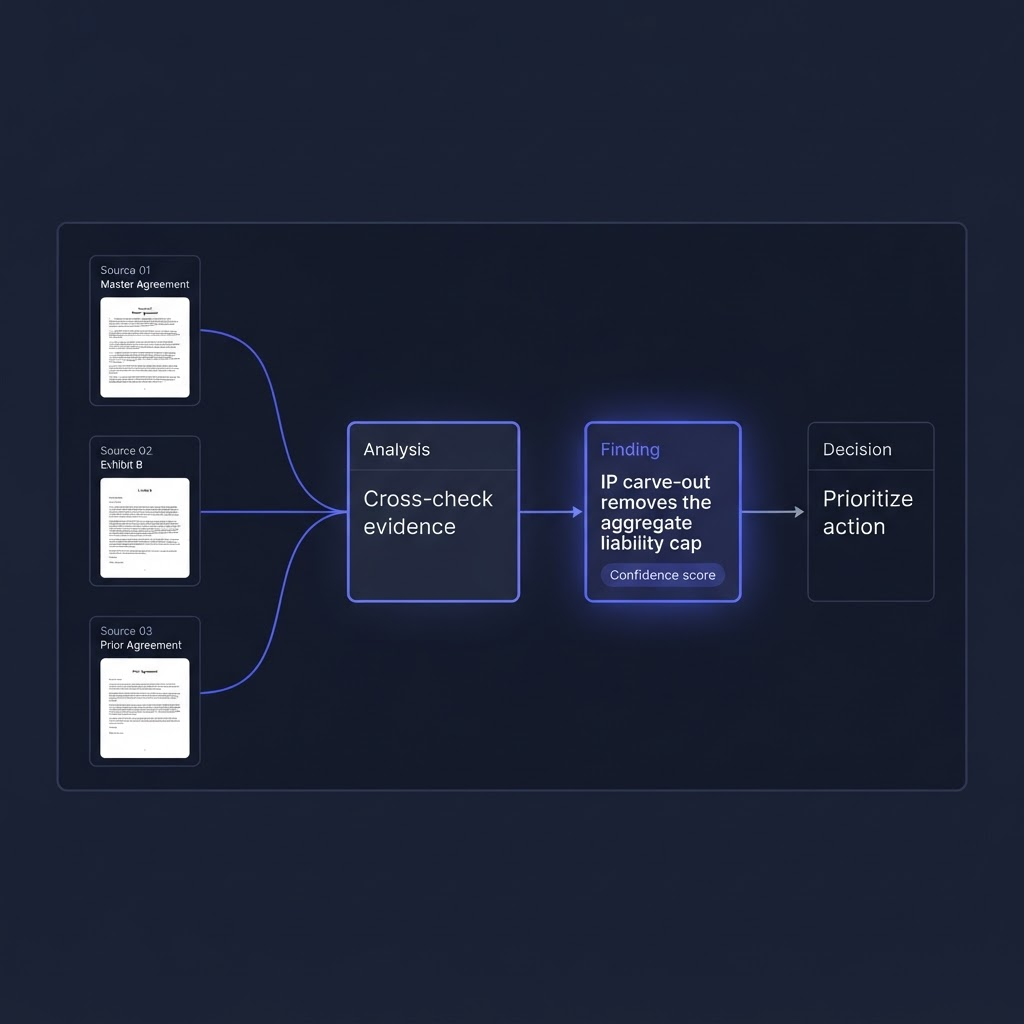
Eval Agents analyze inputs, outputs, prompts, retrieved context, model calls, tool usage, intermediate actions, latency, cost, and workflow state across traces, spans, sessions, and trajectories.
Automated evaluators, deterministic rules, LLM judges, reference datasets, and domain experts assess correctness, relevance, completeness, grounding, reasoning quality, safety, consistency, and task completion.
Eval Agents trace weak outcomes back to their source—distinguishing model limitations from prompt defects, retrieval failures, missing context, tool-selection errors, and workflow breakdowns.
Eval Agents recommend prompt revisions, retrieval changes, knowledge updates, model alternatives, tool corrections, and workflow modifications. Every proposed improvement can be re-evaluated before release.
Automatan unifies evaluation design, behavioral observability, failure diagnosis, and continuous optimization within one enterprise AI reliability layer.
Create repeatable evaluation environments with datasets, rubrics, evaluators, thresholds, and versioned agent configurations.
Evaluate individual model calls, retrieval steps, tool interactions, workflow branches, and complete agent trajectories.
Benchmark systems during development and continuously evaluate real-world behavior after deployment.
Use calibrated reasoning models to evaluate relevance, completeness, clarity, grounding, and policy adherence.
Route ambiguous, high-risk, or low-confidence cases to domain experts and use their judgments to calibrate automated evaluators.
Compare agent versions across prompts, models, retrieval systems, knowledge sources, tools, and workflows before degradation reaches users.
Evaluation quality determines the quality of every improvement that follows. Automatan combines multiple evaluation methods to prevent organizations from relying on a single opaque score.

Determine whether the output is accurate, reaches the right conclusion, and addresses every required part of the task.
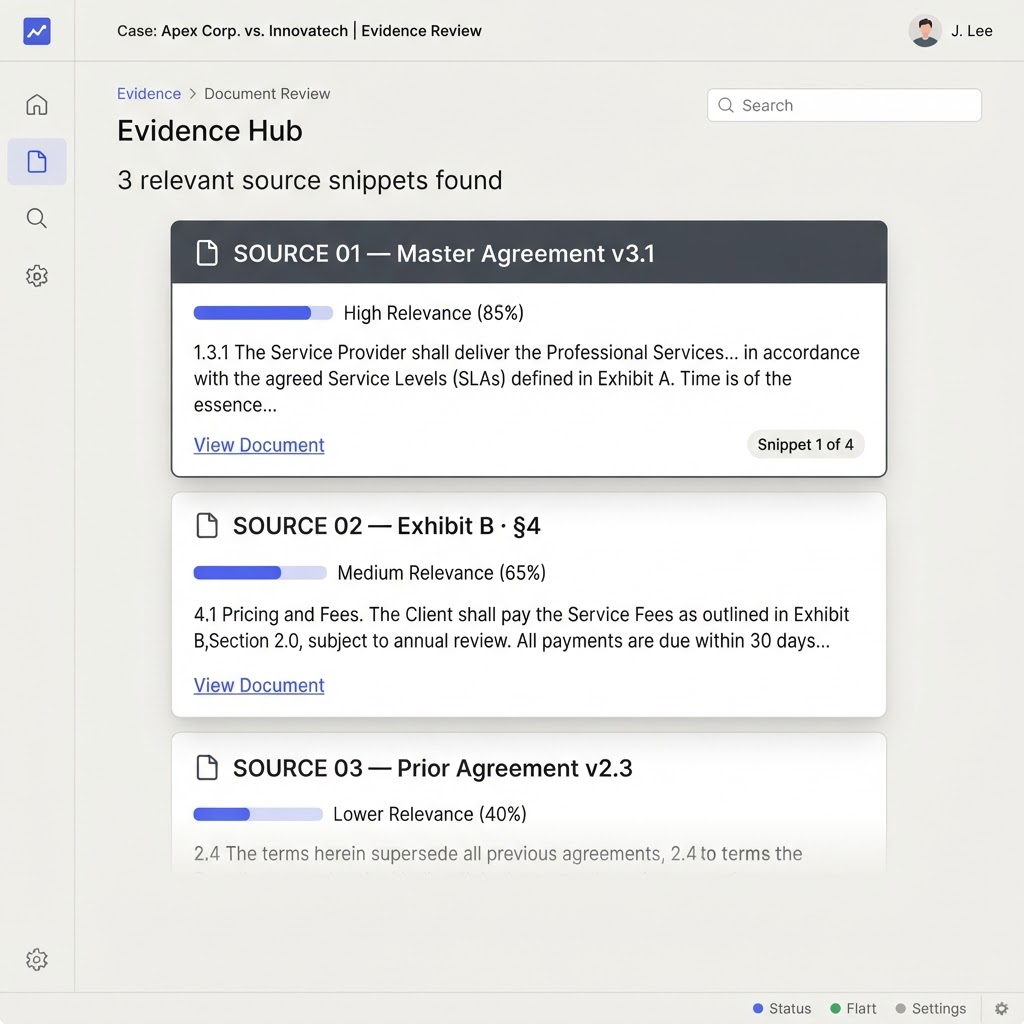
Verify that claims are supported by approved evidence and that the response directly addresses the objective.
Evaluate logical interpretation, defensibility, constraints, schemas, and business-rule adherence.
Measure knowledge relevance, coverage, freshness, authority, tool selection, action sequencing, and workflow completion.
Identify policy violations, unsafe behavior, regulatory risks, missed escalations, and whether the agent achieved the intended operational result.
A medical device regulatory-change assessment agent produces a directionally correct answer—but trace-level evaluation reveals a high-impact gap.
Correctness — Pass · Relevance — High · Completeness — 0.68
The agent retrieves the new regulation and current internal procedure but fails to retrieve the applicable complaint-handling work instruction. Context relevance — 0.96 · Evidence coverage — Incomplete.
The agent selects the correct regulatory database but stops after confirming one internal document match instead of checking all dependent procedures. Tool selection — Correct · Search completion — Failed.
The retrieval workflow lacks a dependency-expansion step for related controlled documents. Recommended improvement: add knowledge-graph dependency retrieval, require evidence coverage across affected procedures, and rerun the regression dataset before deployment.

Protect evaluation data, prompts, traces, retrieved context, and model outputs through controlled access and enterprise-aligned data policies.
Combine evaluator types, calibration workflows, quality thresholds, regression suites, and human oversight to improve evaluation confidence.
Version evaluation criteria, preserve review history, document quality decisions, and maintain evidence across the AI system lifecycle.
Evaluate agents across models, frameworks, data environments, and deployment architectures without binding quality engineering to one AI stack.
Build the evaluation and improvement layer that continuously measures agent behavior, exposes failure patterns, validates every change, and keeps enterprise AI reliable in production.
Typically respond within four hours