Agentic RAG Platform

The Retrieval Layer for the Agentic AI Era

Automatan gives AI agents the ability to determine what knowledge they need, discover it across enterprise systems, evaluate the evidence, refine their search, and apply grounded context to complex business workflows.

Dynamic retrieval planning · Multi-source validation · Grounded reasoning

Retrieval agent investigating enterprise sources and assembling grounded context
1M+Enterprise documents indexed
100K+Knowledge retrieval workflows executed
95%+Source-grounded response accuracy
<10sMedian retrieval-to-answer time
Why Agentic RAG

Retrieval is no longer a lookup problem. It is a reasoning problem.

Traditional RAG retrieves documents related to a user query. Enterprise work requires agents that understand the objective, determine what must be known, investigate multiple sources, evaluate conflicting evidence, and continue retrieving until the context is sufficient to act.

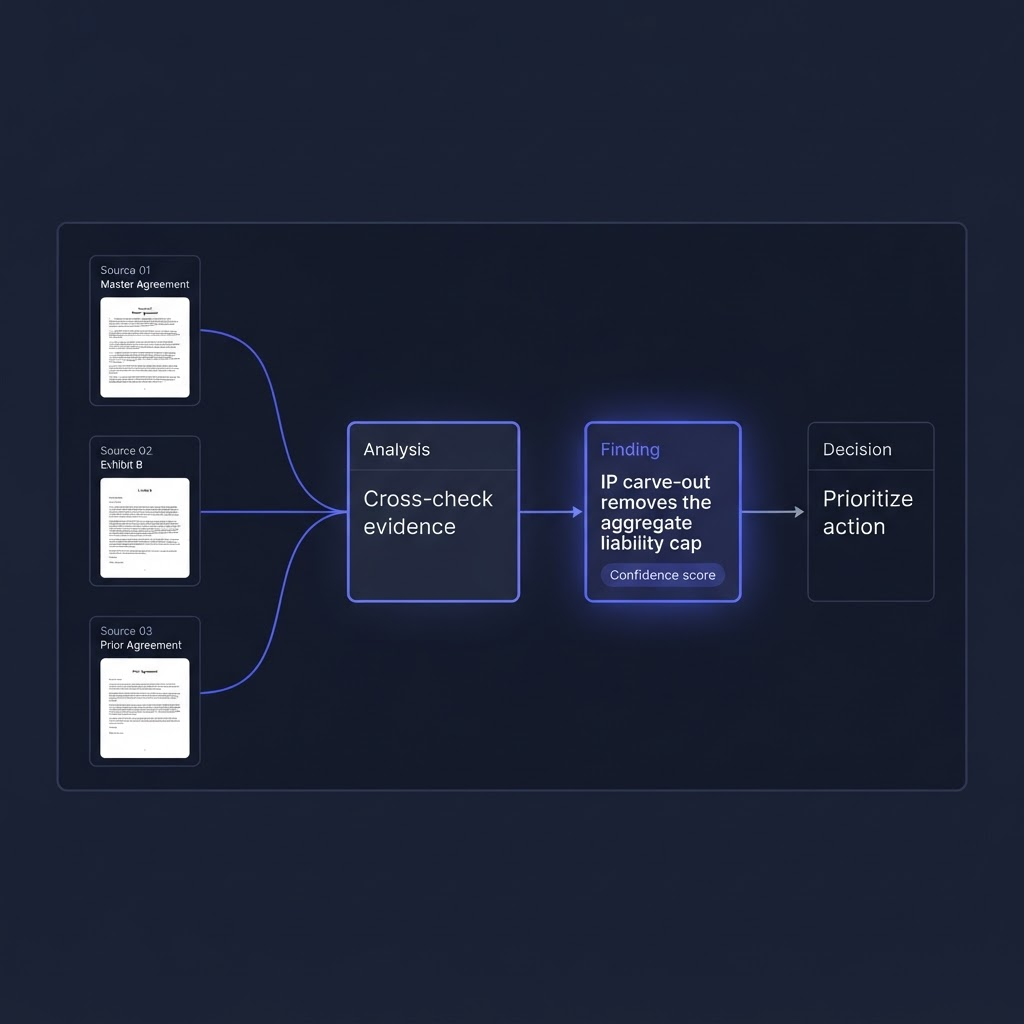
Traditional RAG compared with Agentic RAG planning, investigating, evaluating, and refining retrieval
01

Traditional RAG follows the query.

Conventional retrieval searches for content similar to the words a user provides. It can return relevant passages without understanding whether they are sufficient to solve the underlying business problem.

02

Enterprise questions require investigation.

Critical answers rarely exist in one document. They emerge from contracts, databases, policies, applications, operational records, external sources, and the relationships between them.

03

Agentic RAG plans, evaluates, and adapts.

Retrieval agents decide where to search, which methods to use, how to assess evidence, and when additional investigation is required. Retrieval becomes an autonomous reasoning process—not a single search operation.

How Automatan works

From business objective to evidence-grounded execution

Automatan orchestrates specialized retrieval and reasoning agents through a dynamic knowledge discovery process. Each stage improves the relevance, completeness, and reliability of the context supplied to downstream agents.

01 · Intent Understanding

Determine what must be known.

The agent interprets the business objective, user intent, domain context, required output, and decision criteria. It translates an open-ended request into explicit knowledge requirements.

Business goal identified
Domain constraints applied
Required evidence defined
Output expectations established
02 · Retrieval Planning

Design the investigation.

The agent decomposes the objective into research questions, identifies information gaps, selects appropriate sources, and determines which retrieval methods and tools should be used.

Knowledge requirements — 7
Source systems — 5
Search paths — 11
Dependencies identified — 4
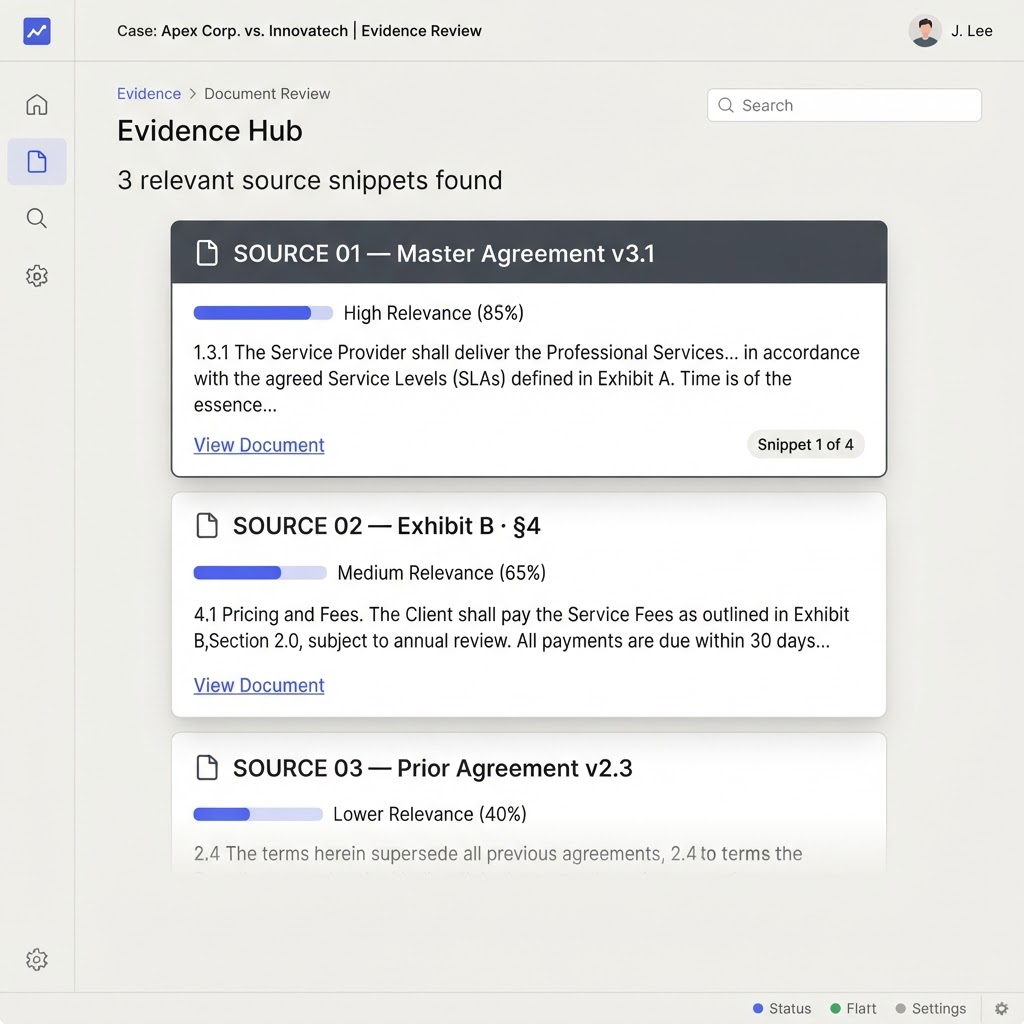
04 · Evidence Evaluation

Validate before information enters the context.

Agents evaluate each result for relevance, authority, freshness, completeness, and consistency. Contradictions and missing evidence trigger new retrieval paths rather than being silently passed downstream.

Relevance — High
Source authority — Verified
Freshness — Current
Action — Refine retrieval
05 · Grounded Synthesis

Assemble the context required to complete the work.

Validated evidence is connected, ranked, and assembled into a task-specific context package. Reasoning agents use that context to generate conclusions, support decisions, or pass grounded instructions into an automated workflow.

Evidence coverage — Complete
Source attribution — Attached
Open questions — 1
Ready for reasoning — Yes
Platform capabilities

An agent-driven architecture for enterprise knowledge discovery

Automatan combines autonomous retrieval, reasoning, orchestration, and validation capabilities into one enterprise-grade knowledge infrastructure.

Query Decomposition

Transform complex business objectives into focused research questions, knowledge dependencies, and executable retrieval tasks.

A
B
C
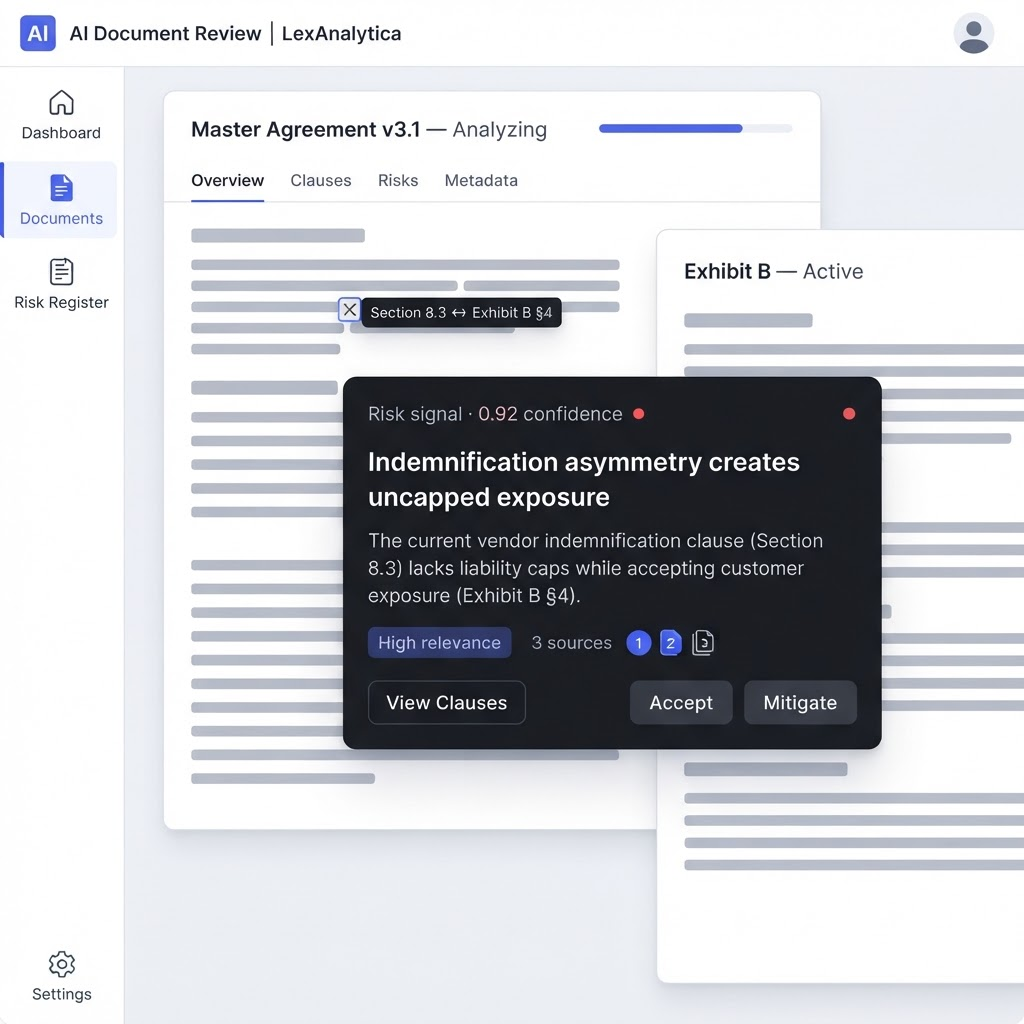
! Risk

Dynamic Retrieval Planning

Select sources, search methods, tools, and retrieval sequences based on the objective, domain, and evidence discovered during investigation.

IP indemnityHigh
TerminationMedium
InsuranceLow

Hybrid and Multi-Source Retrieval

Combine semantic search, vector retrieval, keyword search, structured queries, APIs, applications, and external research within a single retrieval workflow.

Renegotiate cap
Add insurance layer
Define cure period

Knowledge Graph Traversal

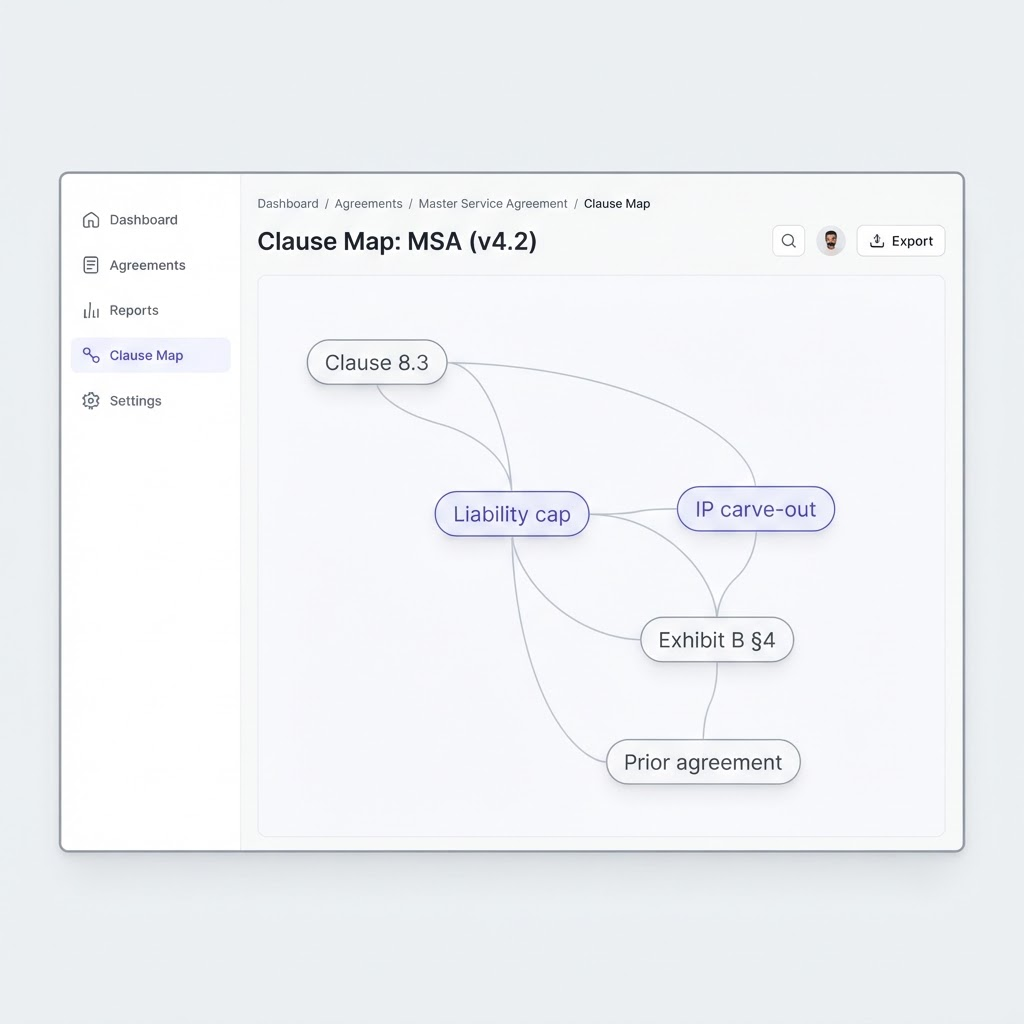
Identify relationships between entities, events, policies, products, customers, suppliers, and operational dependencies that isolated documents cannot reveal.

Self-Correcting Retrieval

Evaluate retrieved evidence, detect weak coverage or contradictions, reformulate queries, and continue searching until defined quality thresholds are reached.

◎Method-driven reasoning
▤Evidence-backed conclusions
↗Calibrated confidence

Evidence-Grounded Context Assembly

Build task-specific context from validated sources, with attribution, freshness signals, confidence indicators, and unresolved information gaps preserved.

Clause 8.2
Clause 8.3
Downstream Risk
Retrieval quality

Every source must earn its place in the context.

Agentic RAG does not treat retrieval volume as retrieval quality. Automatan continuously assesses whether available evidence is relevant, current, credible, consistent, and sufficient for the decision or workflow ahead.

Retrieval, evaluation, gap identification, refinement, and grounded context quality loop

Relevance Scoring

Measure how directly each source supports the objective—not merely how closely it resembles the original query.

Source Authority

Prioritize approved systems, authoritative records, trusted publishers, and domain-specific sources according to enterprise policies.

Freshness and Version Control

Identify superseded documents, outdated records, and newer evidence before information enters the reasoning context.

Contradiction Detection

Compare claims across sources, surface disagreement, and trigger additional investigation when the evidence is inconsistent.

Retrieval Observability

Trace queries, sources, rankings, evaluation decisions, refinement loops, and evidence coverage across the complete retrieval process.

Example retrieval trace

Not a search result. An evidence acquisition plan.

A business objective becomes a structured investigation with explicit evidence, refinement, and grounded action.

● Business Objective · Supplier Operations

A critical supplier disruption requires executive intervention.

Intent understanding

The agent identifies the required decision: whether the disruption materially threatens production, customer commitments, regulatory obligations, or financial performance.

Retrieval plan

The investigation requires supplier performance records, active contracts, inventory and production systems, quality incidents, customer delivery commitments, and external supplier announcements.

Refined investigation

The supplier notice conflicts with internal delivery data. The agent retrieves allocation-level inventory, alternative supplier qualification records, affected customer orders, and contractual escalation provisions.

Grounded output

The disruption creates a nine-day production exposure across two regulated product lines. Recommended action: initiate contractual escalation, accelerate the qualified secondary supplier, and notify affected account and quality teams.

Multiple enterprise sources supporting a grounded supplier disruption finding
Where Agentic RAG is used

Knowledge infrastructure for complex enterprise work

AI Products and Agents
  • Retrieval agents
  • Research agents
  • Knowledge agents
  • Agentic RAG APIs
Enterprise Solutions
  • Regulatory change analysis
  • Due diligence and risk assessment
  • Root-cause investigation
  • Market and competitive intelligence
Business Functions
  • Enterprise AI and data
  • Risk, compliance, and audit
  • Product and engineering
  • Strategy and operations
Industries
  • Financial services
  • Medical devices
  • Private equity
  • Ecommerce and customer operations
Featured transformations

Replace fragmented retrieval with autonomous knowledge discovery

Explore Agentic RAG → →
Input → AI Transformation
User query + contract repositoryEvidence-grounded obligation analysis
Explore →
Input → AI Transformation
Regulatory update + internal policiesApplicable change and compliance evidence
Explore →
Input → AI Transformation
Incident report + logs + support ticketsMulti-source root-cause evidence package
Explore →
Input → AI Transformation
Investment thesis + virtual data roomStructured diligence and risk map
Explore →
Input → AI Transformation
Customer issue + account history + product knowledgeComplete resolution context
Explore →
Input → AI Transformation
Market question + controlled external researchValidated intelligence brief with source attribution
Explore →
Trust and enterprise readiness

Built for governed enterprise knowledge access

Security

Role-aware access controls, encrypted data handling, source-level permissions, and policy-aligned retrieval protect sensitive enterprise knowledge.

Reliability

Evidence evaluation, retrieval refinement, contradiction detection, and source attribution improve the dependability of agent-generated outputs.

Data Handling

Enterprise information remains governed by defined access, retention, isolation, and processing requirements across the retrieval lifecycle.

Deployment

Integrate Agentic RAG with existing applications, data systems, knowledge platforms, models, and security architecture.

Frequently asked questions

Agentic RAG, explained

What is Agentic RAG?
Agentic RAG is a retrieval architecture in which AI agents autonomously plan, execute, evaluate, and refine knowledge retrieval to gather the evidence required for accurate reasoning and task completion. It combines retrieval-augmented generation with agent planning, tool usage, multi-source discovery, validation loops, context assembly, and grounded generation.
How is Agentic RAG different from traditional RAG and enterprise search?
Traditional RAG retrieves information in response to a query. Enterprise search helps users locate existing content. Agentic RAG begins with an objective: agents determine what they need to know, select where and how to search, evaluate the evidence, refine the investigation, and use the resulting context to support a decision or complete a workflow.
Does Agentic RAG eliminate hallucinations?
No AI architecture can eliminate uncertainty entirely. Agentic RAG reduces hallucination risk by improving retrieval quality, grounding outputs in evidence, validating sources, detecting contradictions, and preserving source attribution. When evidence is incomplete or conflicting, the system can surface that uncertainty instead of presenting unsupported conclusions as fact.
Can Agentic RAG work with our enterprise data?
Yes. Retrieval agents can connect with documents, databases, knowledge bases, applications, APIs, structured systems, and approved external sources. Agentic workflows can be configured around your domain, access policies, data environment, business objectives, and decision processes without rebuilding the entire architecture for every use case.
Build AI agents that know how to investigate.

Give every enterprise agent the ability to determine what knowledge it needs, find it across the right sources, validate the evidence, and apply grounded context to real business work.

Typically respond within four hours